Regenerative Tourism
Into the Amazon
Eleven days in the Amazon interior.
No roads, no signal, no familiar reference points.
What begins as a journey into the forest becomes a journey into yourself.
A different kind of travel
Most travel exchanges money for an experience and leaves the place as it found it. Our journeys are designed to do something else. Each one contributes — financially and structurally — to the long-term protection of the forest the traveller comes to see.
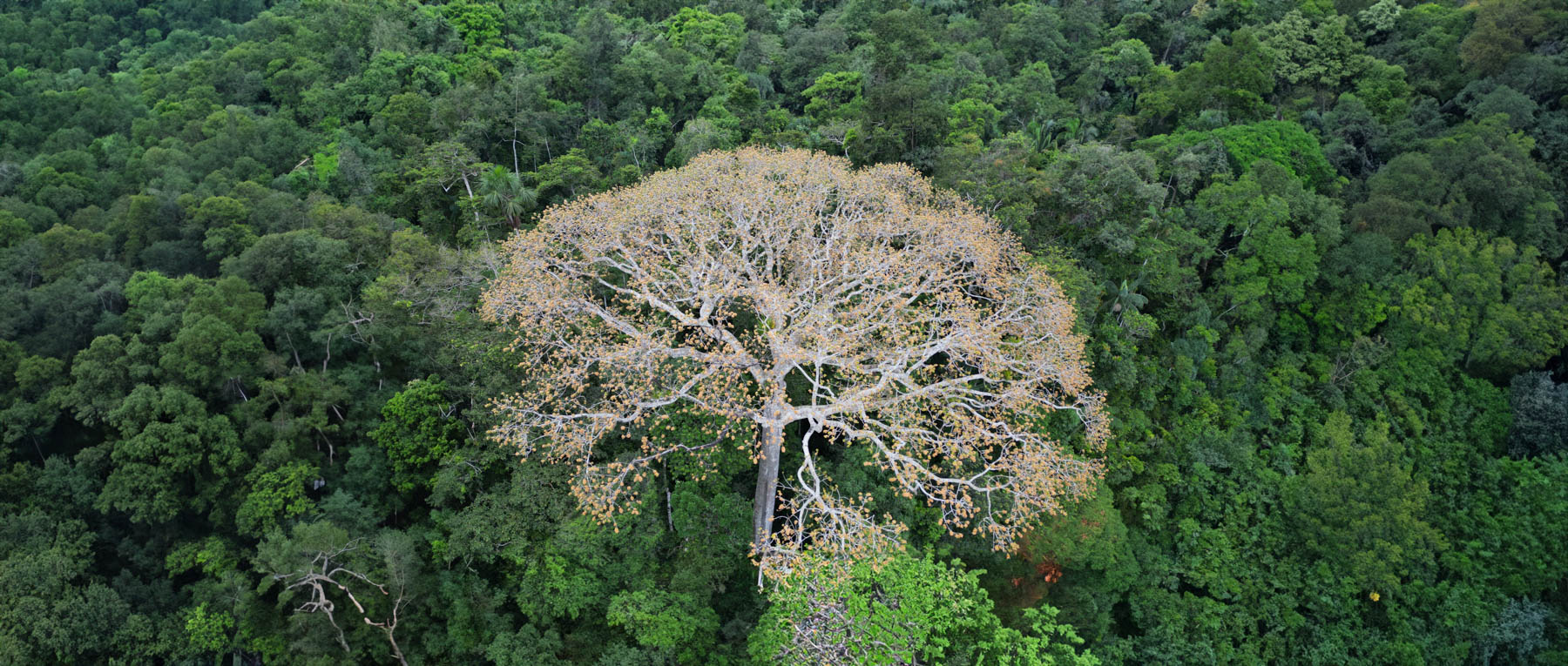
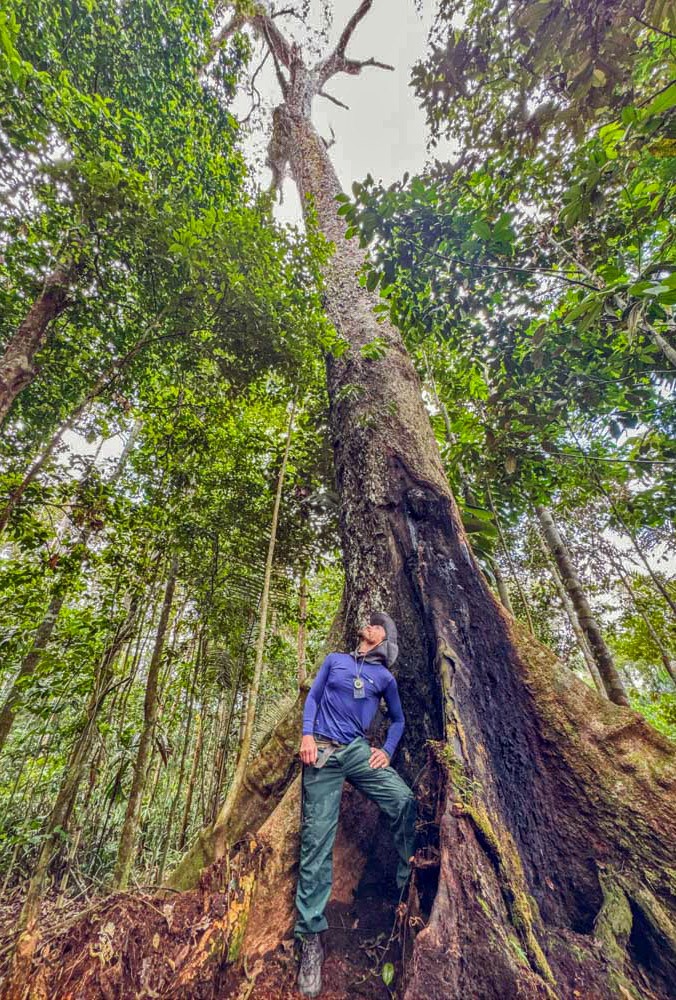
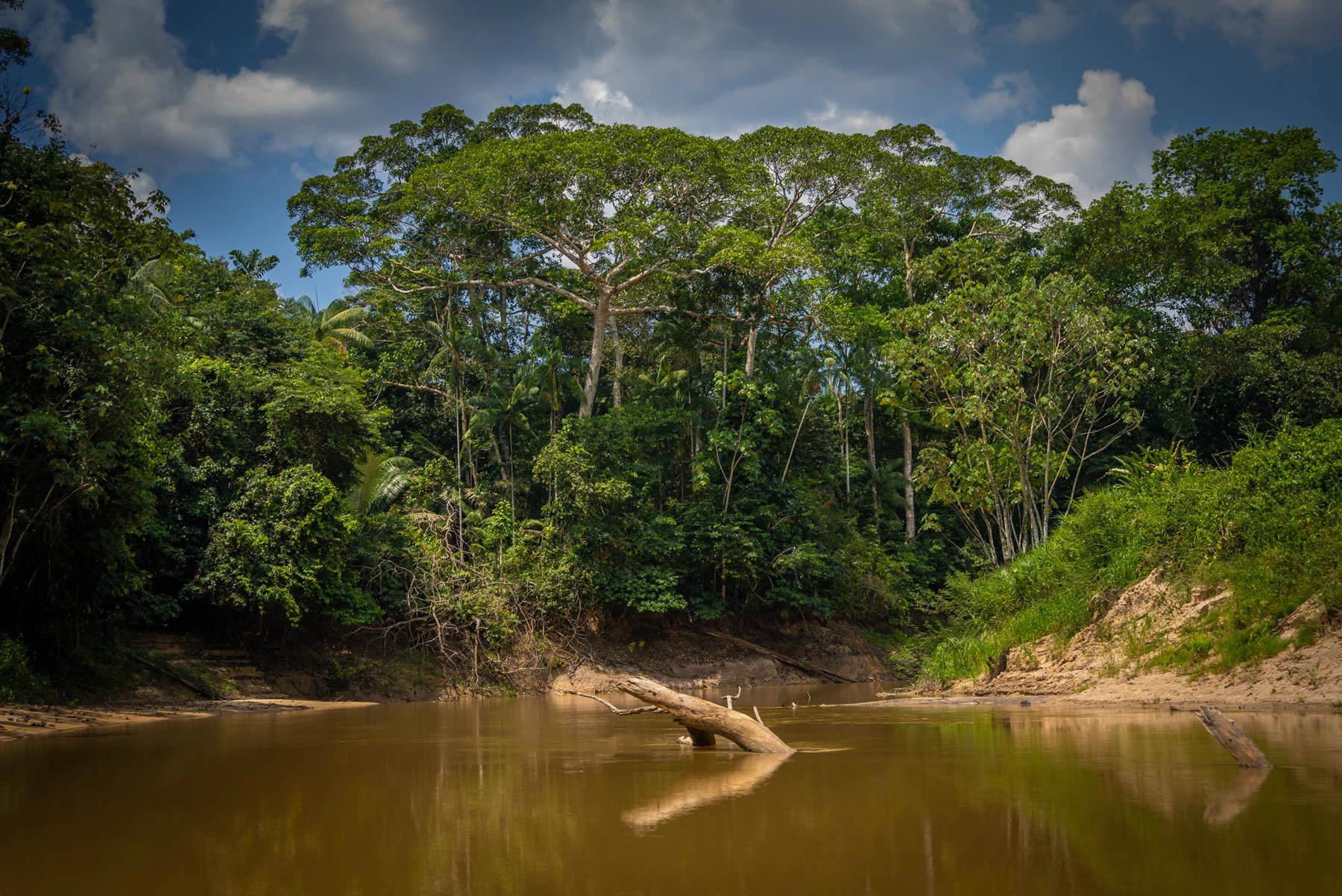
Every traveller supports a conservation reserve of over 24,000 hectares of primary rainforest, and a farmer-centred agroforestry programme rebuilding the local economy around standing forest rather than against it. The journey is not separate from the work. It is part of how the work continues.
Where the journey begins
The journey starts in Cruzeiro do Sul, a small city on the western edge of the Brazilian Amazon. Travellers walk through the river port and market — the economic heart of the region — and begin to see how life here is shaped by the forest and its resources.
On the outskirts, a local guide shows them three landscapes side by side on the same land: forest cleared for farming, forest regenerating under active care, and pristine primary rainforest. The contrast tells the whole story of what is being lost and what is possible.
The driver of that loss is not carelessness. Around the municipality, families farm small cassava plots; when the soil exhausts after two or three years, they clear new forest and start again. Changing those economics is the long task this work belongs to.
Before entering the reserve, travellers already understand what is at stake — not as an abstraction, but as something they have seen with their own eyes. The journey has started before the forest.
Five nights in the interior
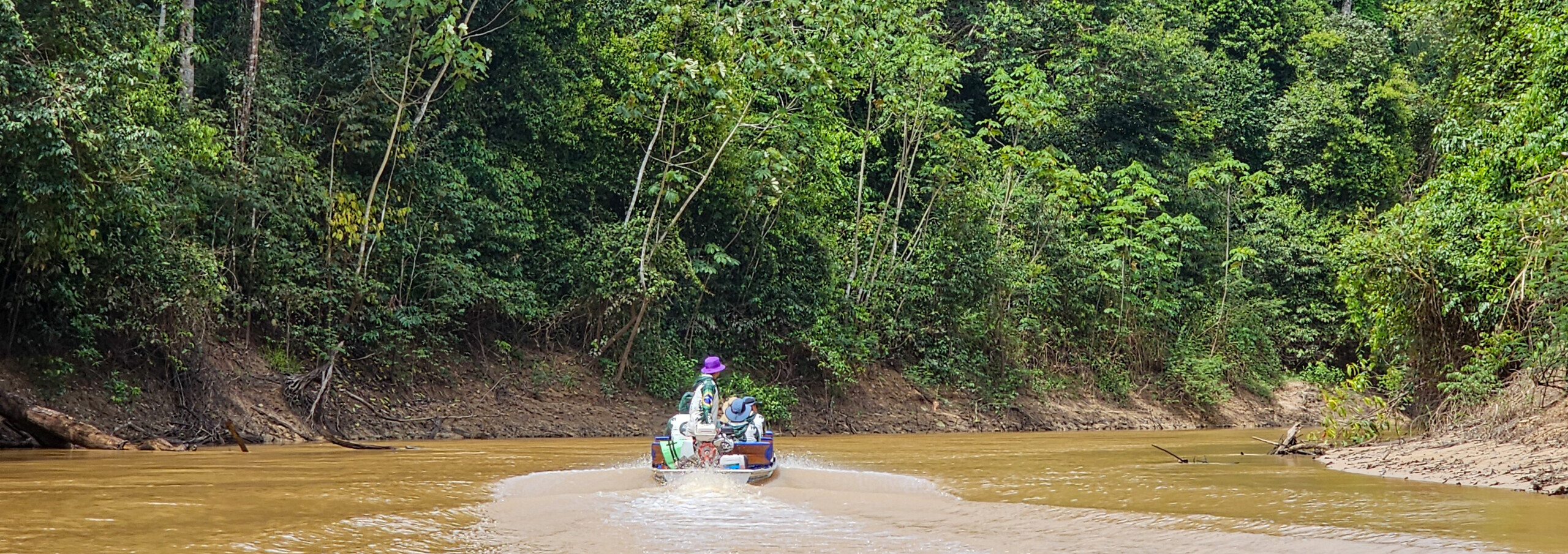
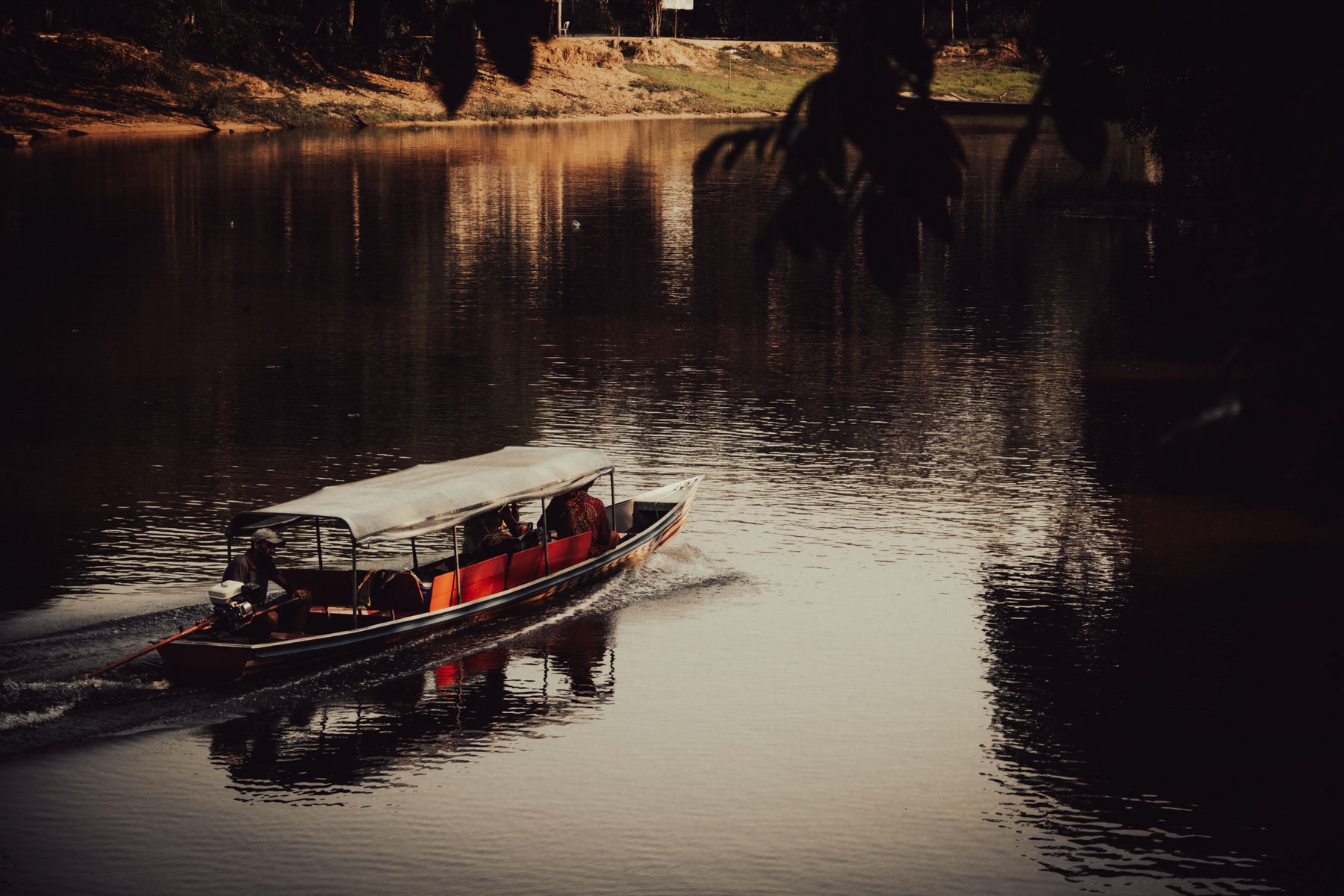
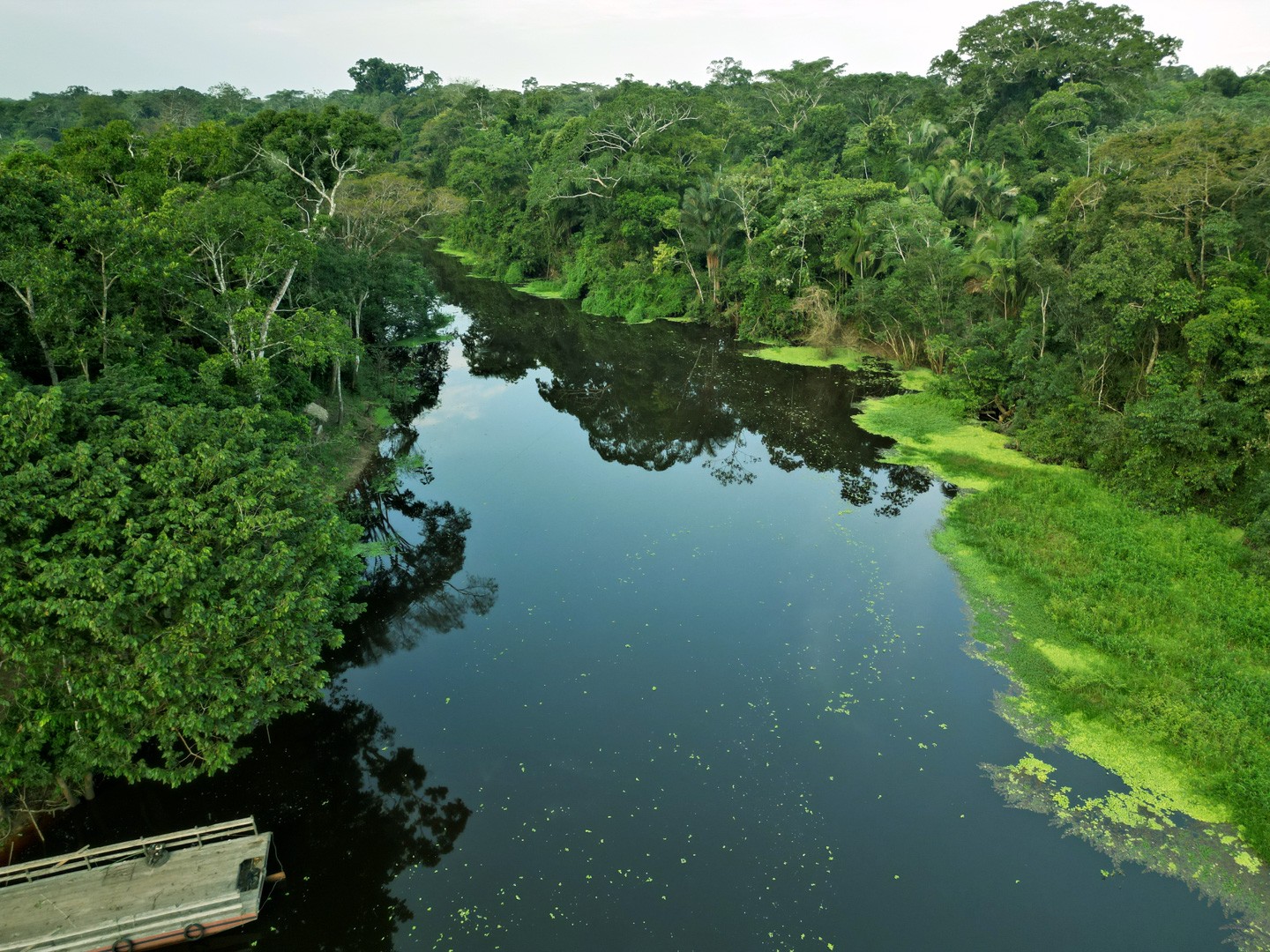
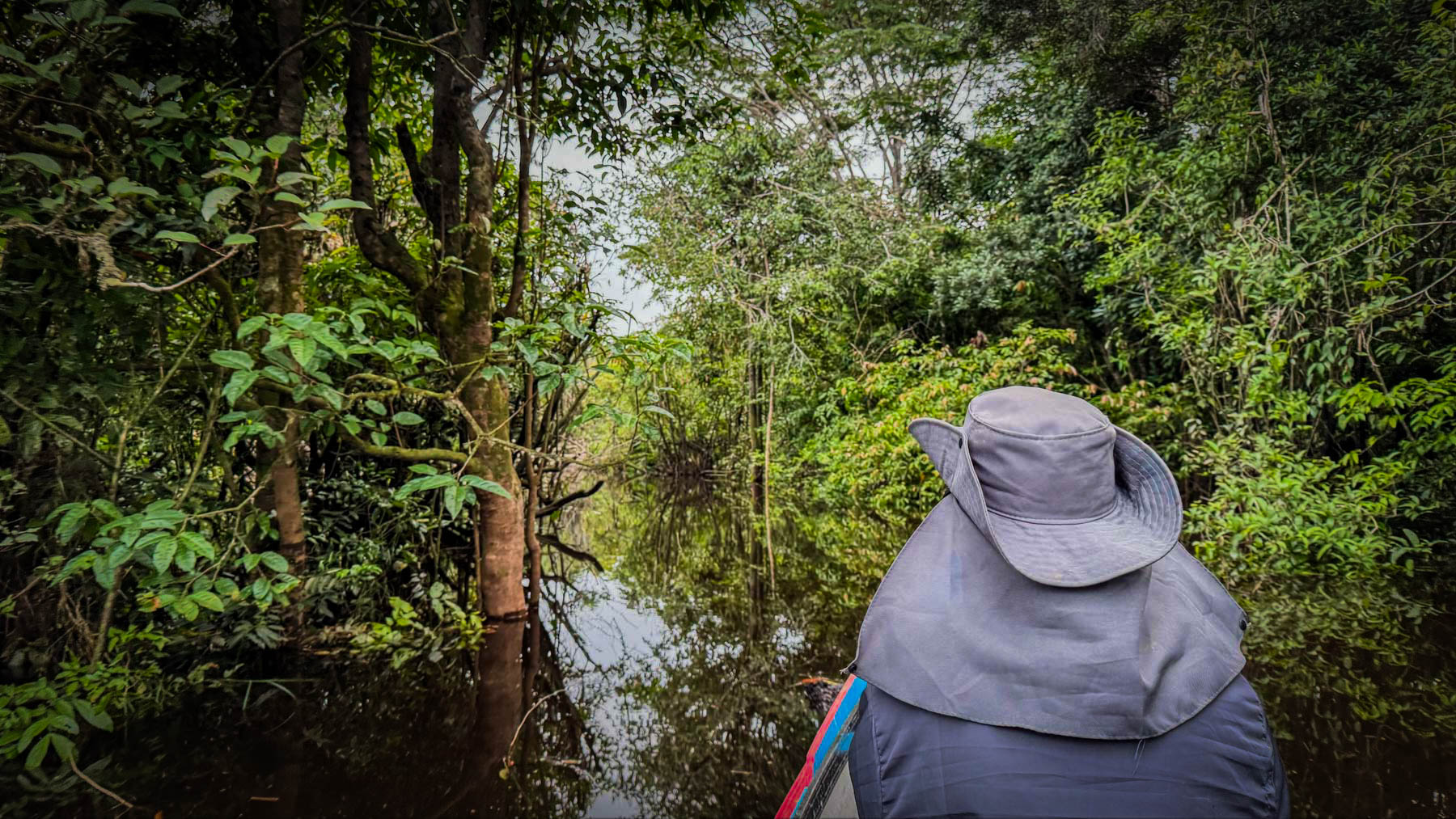
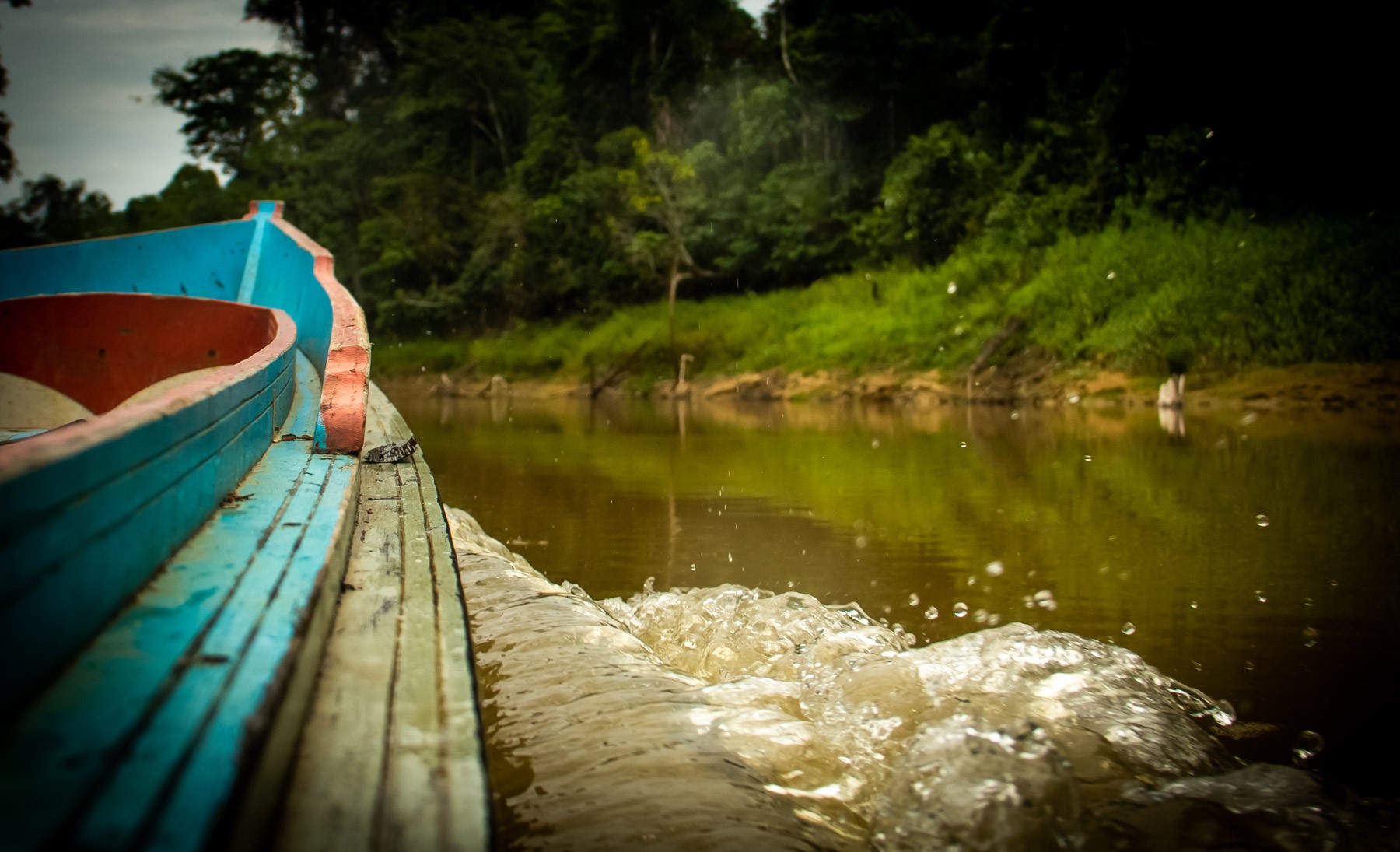
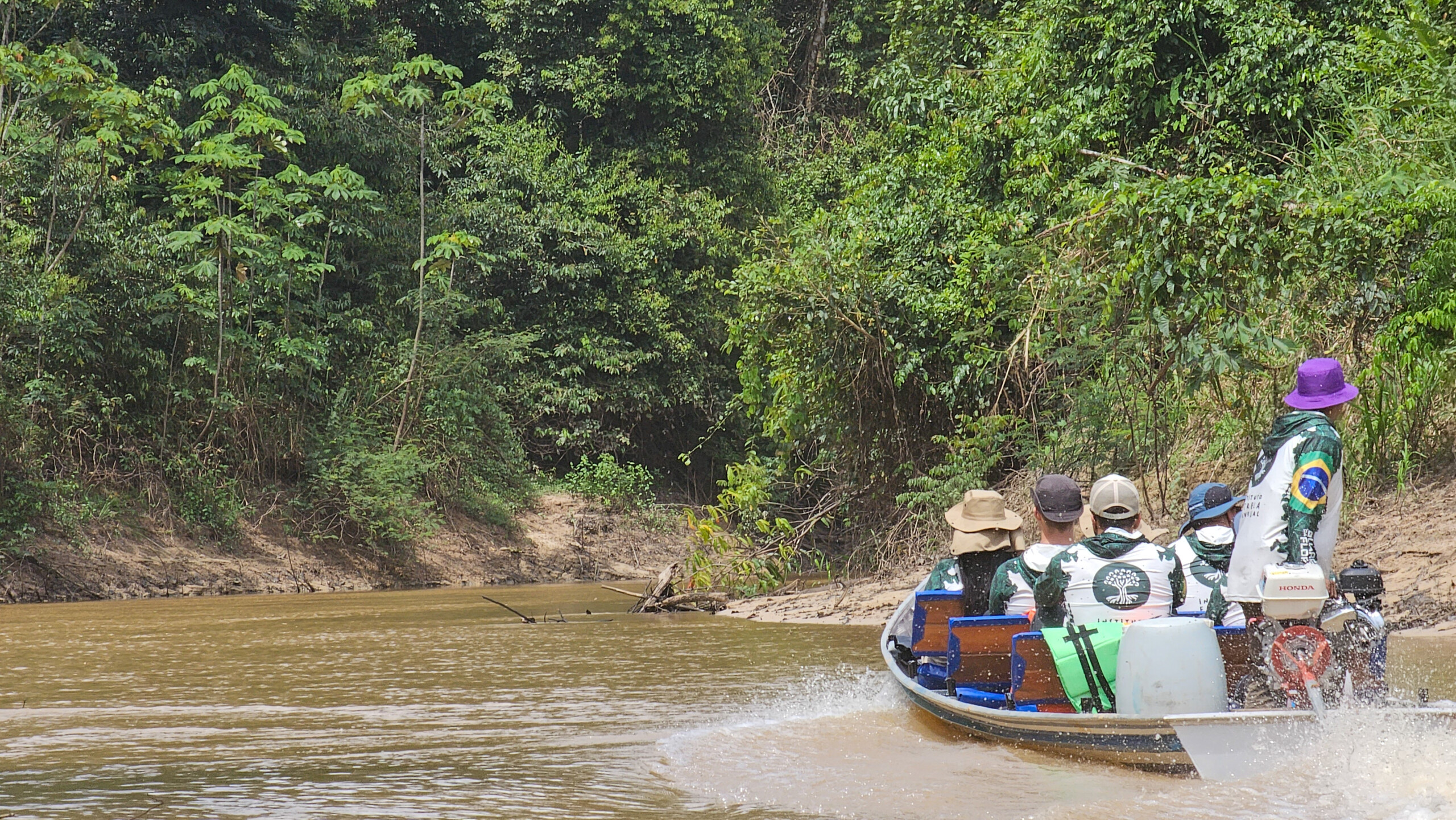
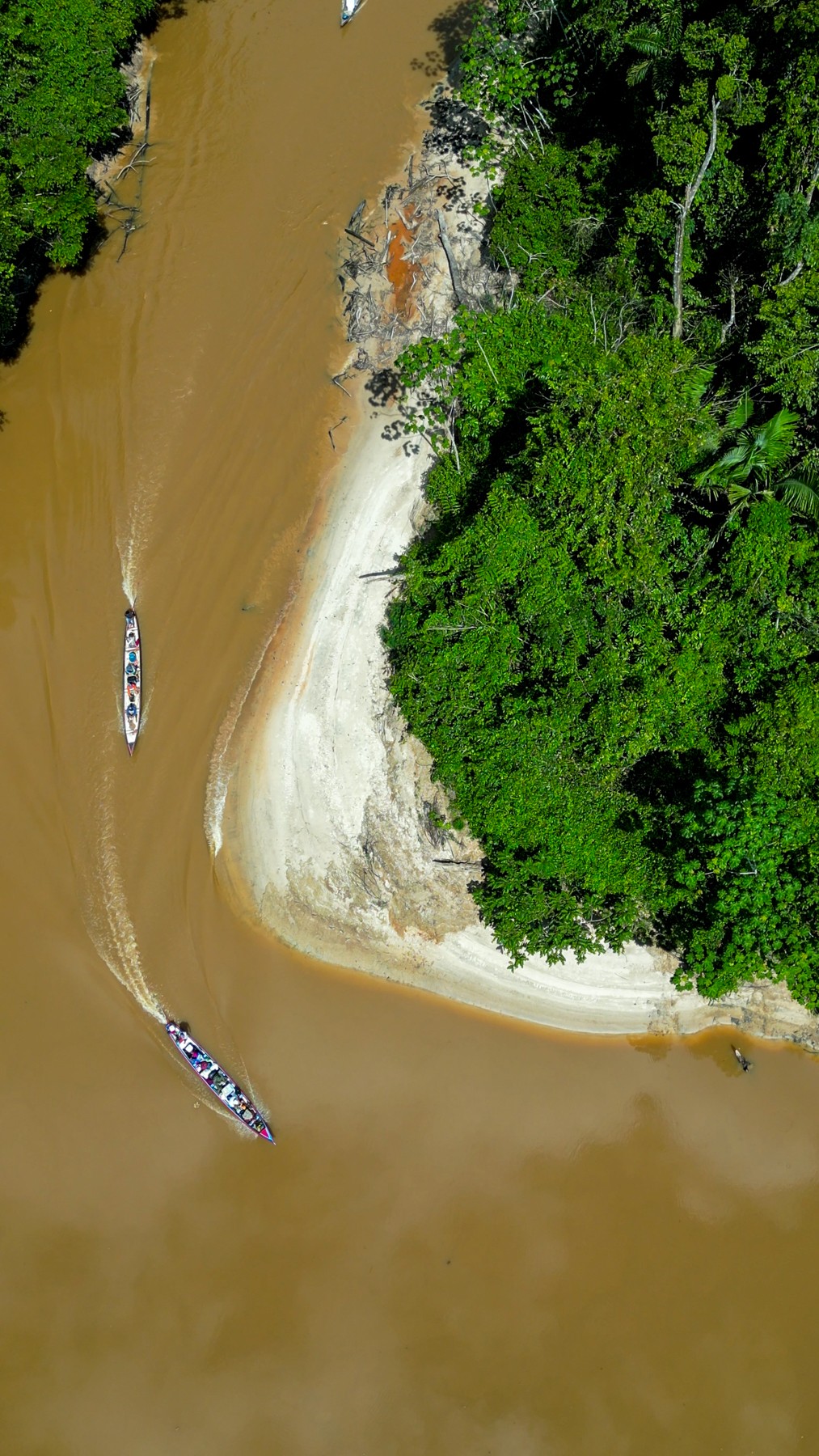
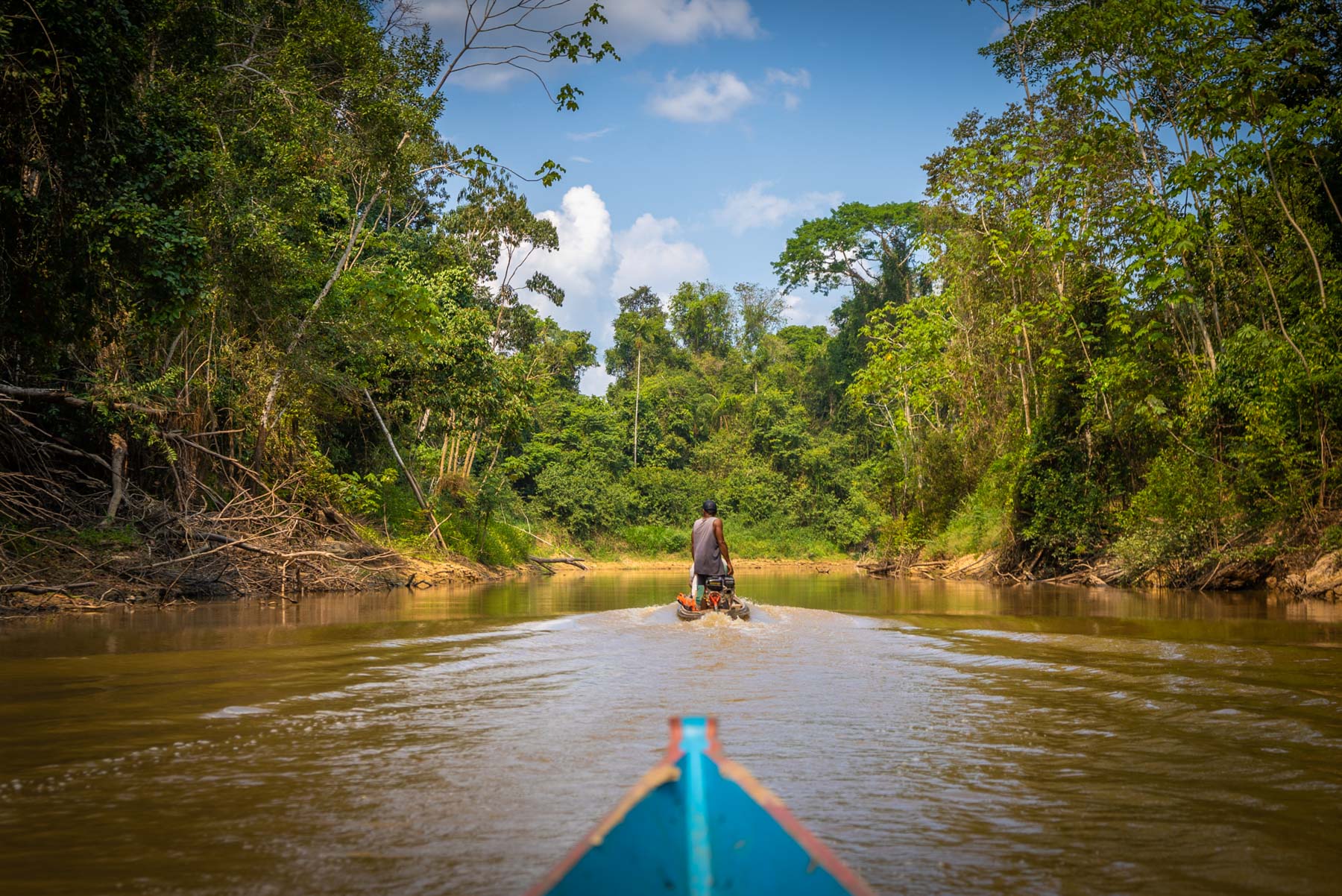
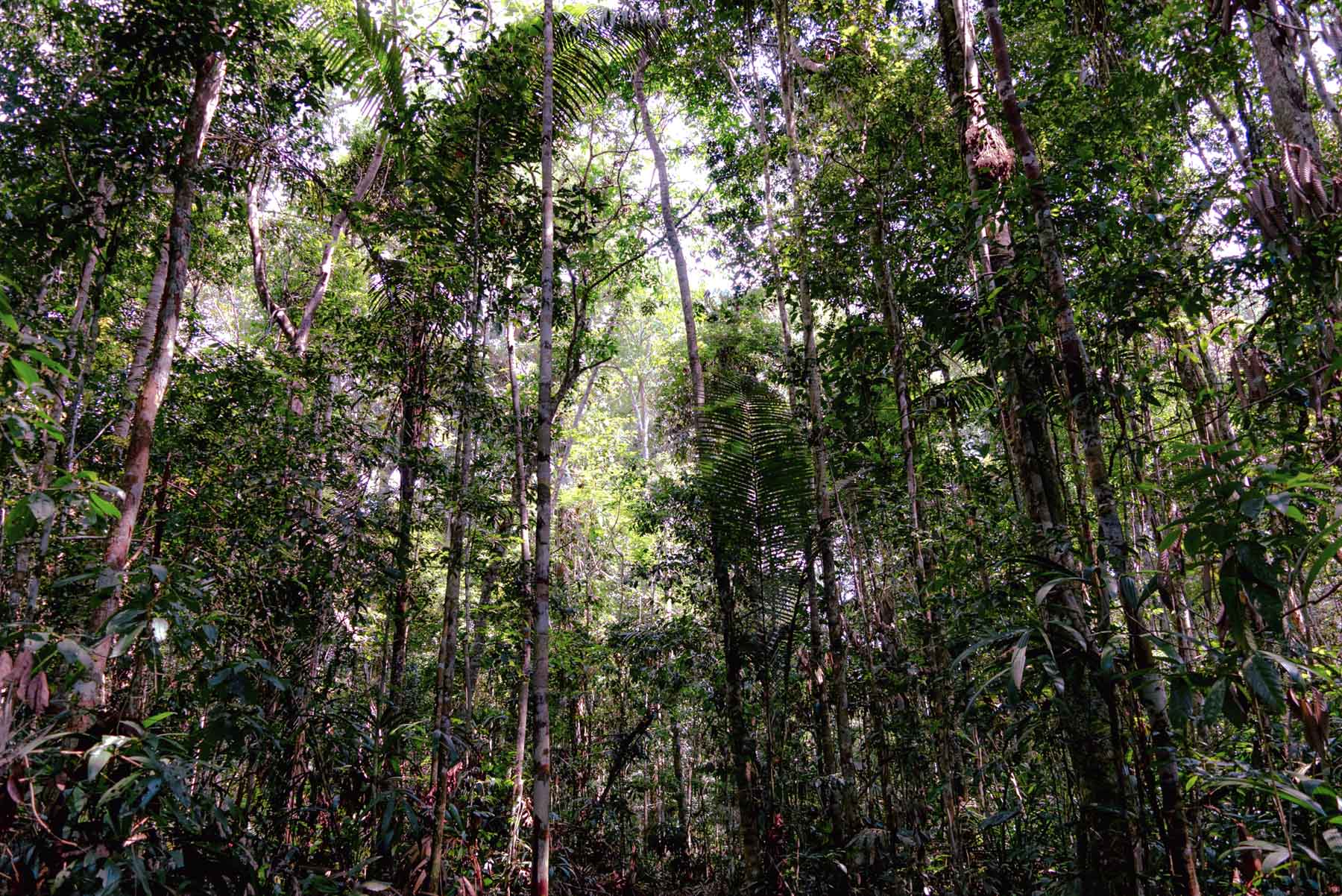
A full-day boat journey up the Boa Fé river and a forest walk after dark bring travellers to IEUNI’s reserve base — a small cluster of traditional Amazonian okas set within primary forest, accessible only to IEUNI journeys.
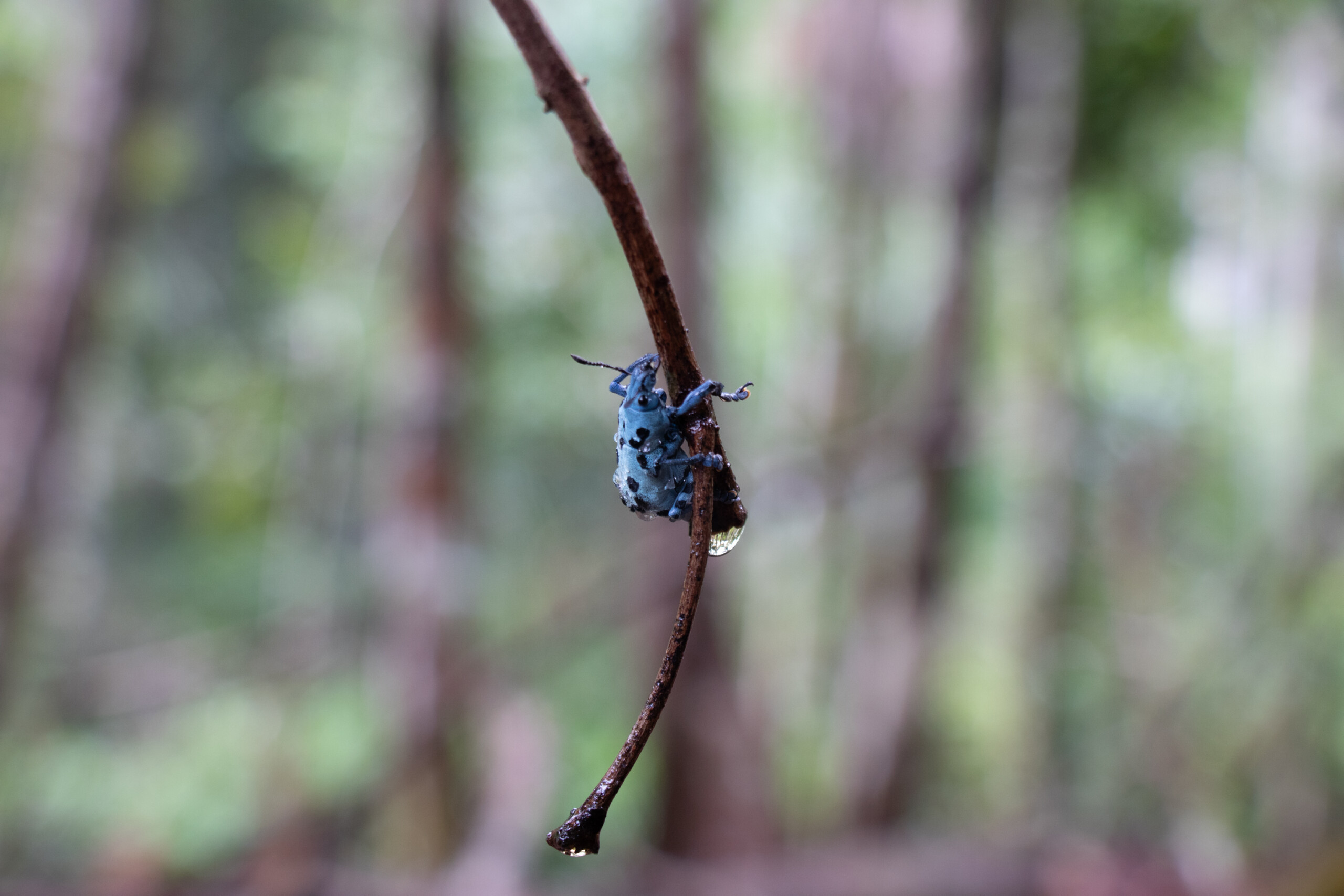
The base is intentionally minimal and low-impact — designed to keep travellers connected to the forest rather than insulated from it. Travellers sleep in mosquito-netted hammocks, eat food prepared over fire from local ingredients, and bathe in a pristine forest stream. At night, the forest’s living soundscape — insects, birds, rustling leaves, distant animal calls — becomes part of the experience.
In a place this remote, the mind slows down. Travellers face not only the forest, but themselves.
“You learn to walk more slowly, look more carefully, listen without needing to understand everything. The Amazon does not ask for your explanation. It asks for your presence.”
Each day follows the rhythm of the forest. Contemplative walks in silence. Time on the river. Guided breathwork. Evenings around the fire, where the group shares what the day brought.
Experienced guides hold the space throughout — the programme is designed not just to immerse travellers but to support them as they process what they encounter.
Guajará is genuinely remote — no roads connect it to the outside. That remoteness is not an obstacle. It is the condition that makes transformation possible.
The people who live here
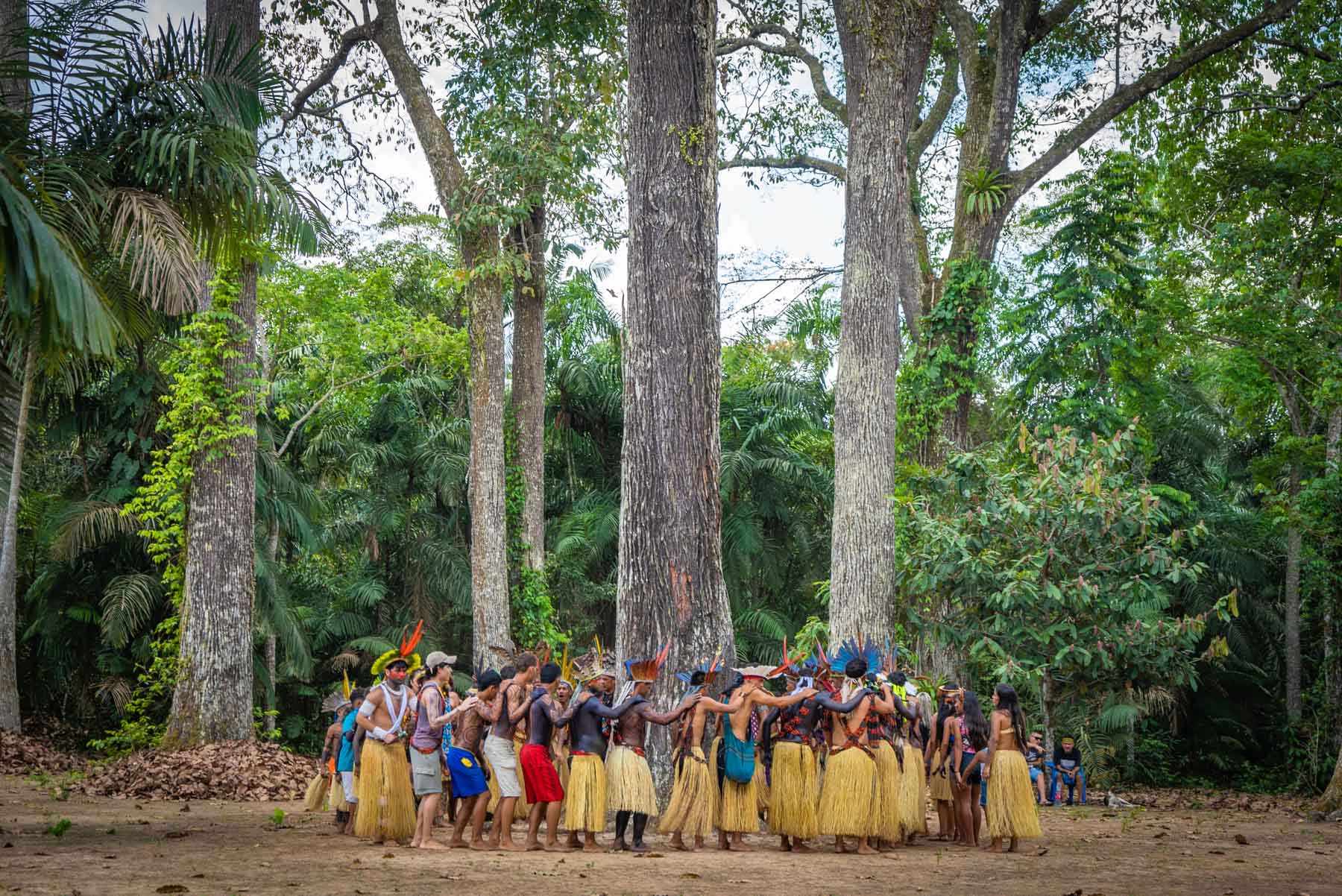
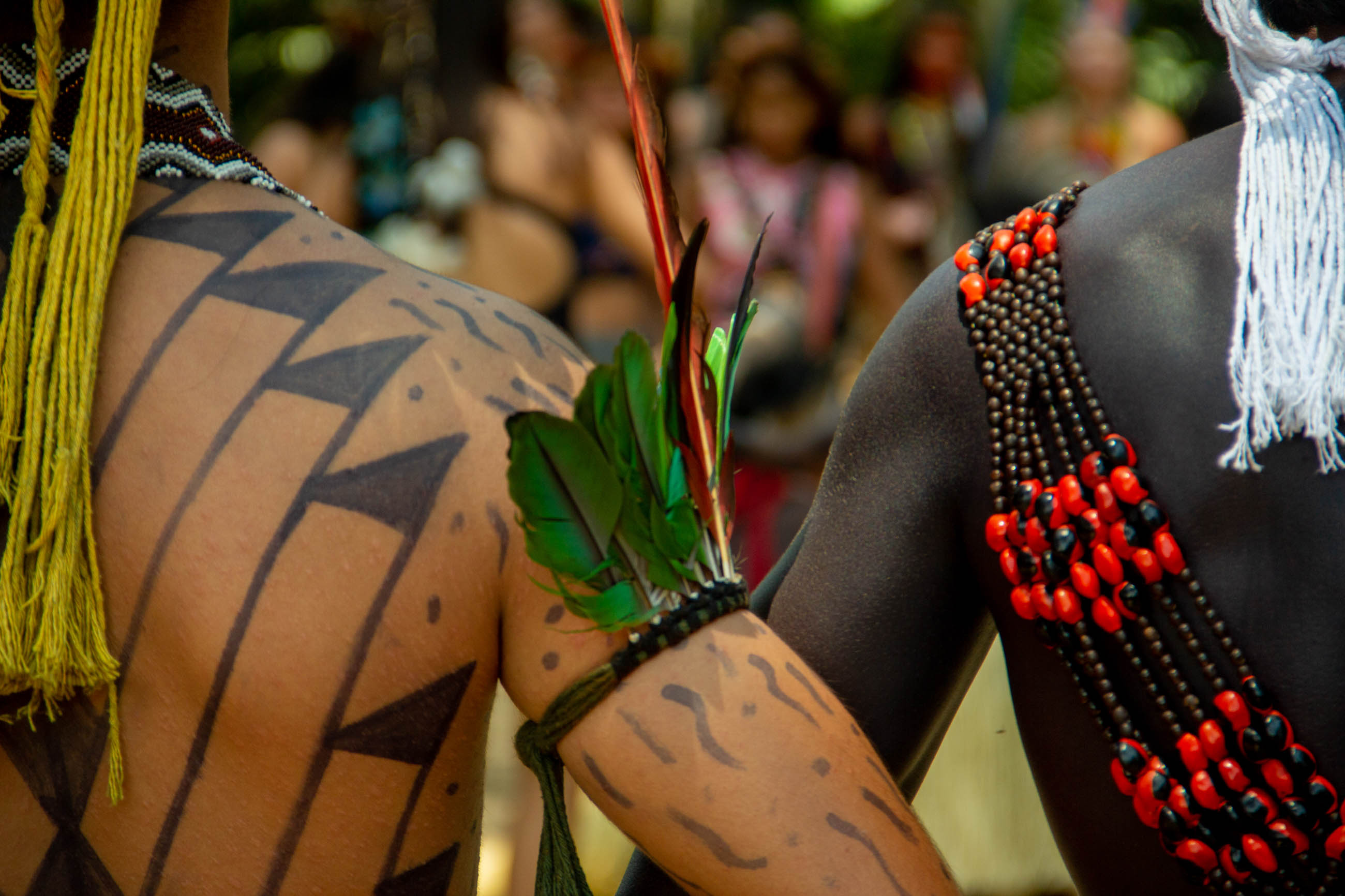
On the return journey, travellers stop at a river settlement to see how ribeirinho families live along the waterways. In Cruzeiro do Sul, they meet a Puyanawa indigenous community — a respectful encounter developed in collaboration with the community, not a staged performance. Five days inside the forest change how travellers meet the people who live at its edges.
By this point in the journey, these encounters feel less like visits and more like recognition — of shared vulnerability, shared stakes, and a shared question about how to live.
How it works
We are not a consumer-facing booking platform. We work with a small number of agency partners who share our commitment to high-quality, meaningful travel.
What agencies do. Tour agencies sell and market the journeys to their clients under their own brand. You manage the client relationship from enquiry to departure.
What IEUNI does. IEUNI handles everything on the ground. Programme design, logistics, safety and emergency systems, experienced local guides, low-impact operations, and full access to the reserve. From the moment your clients arrive in Brazil, we take care of it.
The journey
On the ground: 11 days
Group size: Up to 15
Language: English
Season: June–November
Operated by: IEUNI, Guajará
Accommodation. Two nights in a hotel in Cruzeiro do Sul. Five nights at the reserve base in traditional Amazonian okas — open-sided timber structures where travellers sleep in mosquito-netted hammocks. Meals at the base are prepared over fire from local ingredients. Satellite communication is maintained throughout.Itineraries are developed in partnership with each agency based on their clients’ profile. Total trip duration varies by departure market — international travel adds 2–4 days depending on routing. Contact us to discuss.
Work with us
We are in active conversation with a small number of agency partners. If you work with high-value travellers looking for something beyond conventional eco-tourism, we would like to talk.
Contact us → contact@ieuni.org
Tourism is one of three connected programmes. Every journey supports the conservation reserve and the agroforestry project. Travellers see both — over 24,000 hectares of protected forest and the farming families building a different future. Tourism revenue contributes to funding both programmes.
It also does two other things. It demonstrates the work in person, to people who would otherwise only read about it from far away. And it narrates — travellers leave as informed witnesses, extending the constituency for forest protection well beyond the Amazon.
Project Background
The Conservation and Regenerative Tourism Program preserves a culturally rich ecosystem and has become a regional reference in education, awareness and tourism that directly benefits the community and ecosystem.
Anchored by a small eco-sanctuary in the heart of the reserve, participants can experience the beauty and majesty of the unspoiled Amazon Forest, a paradise on Earth.
This program offers participants a unique opportunity to engage with the energy and culture of local traditional communities while providing these communities with economic self-empowerment. By turning their craftwork, expertise, and knowledge of the forest into economic stability, the program supports both conservation and community development.
Our Strategies
To develop the idea of rainforest Regenerative Tourism Program in the Amazon, IEUNI aligns with strategies:
Sustainable Expeditions
IEUNI organises small-group tours using eco-friendly transportation and accommodations to minimize environmental impact. This includes jungle cruises and stays in eco-lodges powered by solar energy.
IEUNI organises small-group tours using eco-friendly transportation and accommodations to minimize environmental impact. This includes jungle cruises and stays in eco-lodges powered by solar energy.
Community Involvement
Engage local and Indigenous communities in planning and managing tours. This ensures equitable distribution of benefits and promotes cultural exchange.
Engage local and Indigenous communities in planning and managing tours. This ensures equitable distribution of benefits and promotes cultural exchange.
Education and Awareness
Provide educational experiences about the rainforest’s biodiversity and conservation challenges, fostering global support for preservation efforts.
Provide educational experiences about the rainforest’s biodiversity and conservation challenges, fostering global support for preservation efforts.
Economic Alternatives
Offer employment opportunities for locals as guides and lodge staff, reducing reliance on deforestation activities.
Offer employment opportunities for locals as guides and lodge staff, reducing reliance on deforestation activities.